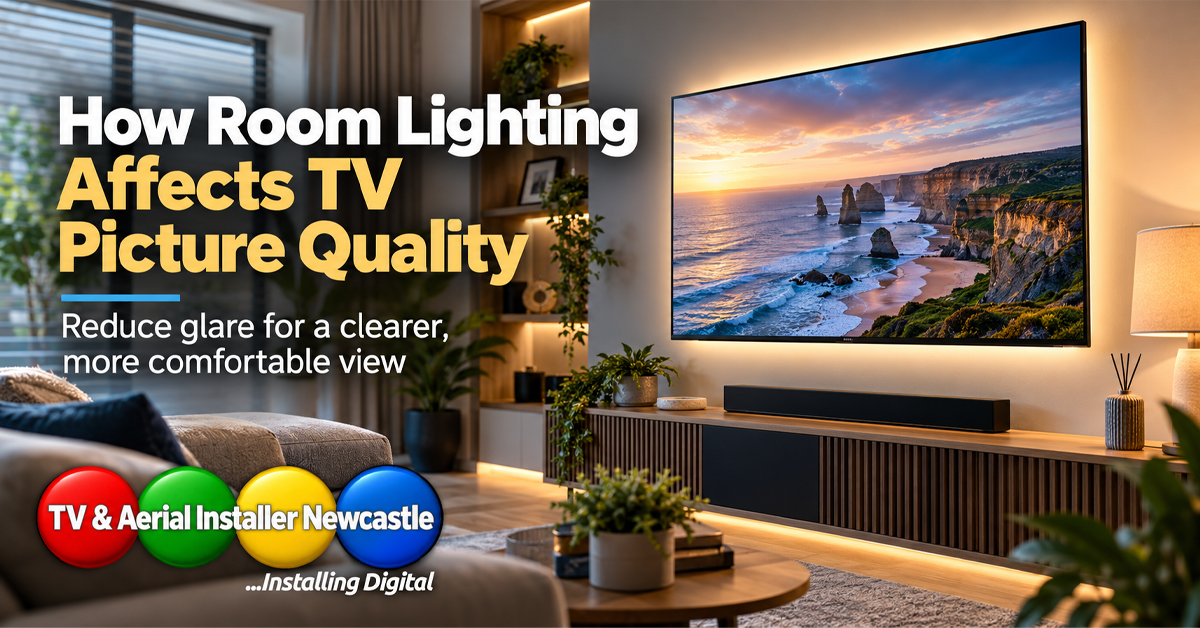
Room lighting can make a good television look disappointing. Reflections from windows, bright ceiling lights and lamps placed in the wrong position can wash out darker scenes or leave you watching your own reflection instead of the programme.
A better setup starts with controlling glare rather than simply turning every light off. The aim is comfortable viewing, a clear picture and a room that still works when the television is not in use.
Start by identifying where the glare comes from
Before changing picture settings, sit in the normal viewing position during the times you most often watch TV. Look for reflections from windows, patio doors, ceiling fittings and table lamps. A reflection that is harmless in the morning can become distracting when the sun moves round later in the day.
If you are planning a new wall-mounted TV, checking these sight lines before drilling can save a lot of frustration. Our TV wall mounting and hidden cable planning guide covers other practical points worth considering before installation.
Use soft light behind or beside the screen
A small amount of indirect room light can be more comfortable than watching a bright screen in a completely dark room. Lighting behind the television can also reduce the strong contrast between the screen and the wall around it.
Keep the light source out of your direct line of sight and avoid anything that reflects strongly in the panel. If you use an LED backlight, a neutral, steady light is generally less distracting than constantly changing colours when accurate picture appearance matters.
Keep lamps away from the reflection path
A lamp does not need to be directly in front of the TV to appear on the screen. Glossy and semi-gloss panels can catch light from surprisingly wide angles. Moving a lamp a short distance, lowering its brightness or directing it towards a wall can make a bigger difference than increasing the TV brightness.
Think about windows before choosing the TV position
Where possible, avoid placing the screen directly opposite a large window. Curtains and blinds can help, but the television position is the more permanent decision. A screen mounted at the correct height and angle should also suit the seating position rather than being tilted simply to escape a reflection.
If you are still deciding on screen size and seating position, see our TV size and viewing distance guide.
Do not use picture brightness as the only fix
Turning the television up to an extremely bright setting can overpower some room light, but it does not remove the reflection itself. It can also make evening viewing uncomfortable. Deal with the light source first, then adjust the television for the room.
For a broader setup checklist, our guide to getting the best picture from your TV explains the main controls worth reviewing.
Plan lighting alongside wall mounting and cables
A tidy installation is easier when power, signal cables, soundbar position and lighting are considered together. Backlighting needs a suitable power source, while visible leads hanging from an otherwise clean wall-mounted setup defeat the point.
TV and Aerial Installer Newcastle provides TV installation, wall mounting, setup and related audiovisual services across Newcastle and Northumberland. Mick Stocker has 23 years of audiovisual experience, so practical details such as viewing position, cable routes and connected equipment can be considered as part of the installation.
Want a cleaner, more comfortable TV setup?
If glare, cable routes, screen position or connected equipment are making your room difficult to plan, get in touch with TV and Aerial Installer Newcastle to discuss your TV installation or wall-mounting requirements.