Why aerial cable deserves attention
When a television breaks up or loses channels, the aerial itself often gets the blame. Yet the coaxial cable carrying the signal from the aerial to the television is just as important. Ageing cable, poorly fitted plugs, water ingress and unnecessary joins can all reduce signal quality. A new television or repeated retuning will not repair a damaged cable. This guide explains the common problems, what householders can check safely and when a professional signal test is the sensible next step.
What coaxial cable actually does
Coaxial cable has a central conductor surrounded by insulation, a screening layer and an outer protective sheath. The screening helps prevent unwanted electrical interference entering the signal path. Cable designed for television aerial systems is generally 75-ohm coaxial cable, but products vary in screening, construction and suitability for indoor or outdoor use. A cable that looks intact from a distance can still have damage inside, especially where it has been crushed behind furniture or repeatedly bent.
Why screening matters in a modern home
Modern homes contain routers, power supplies, LED lighting, chargers and other equipment that can produce electrical noise. Good screening helps keep interference out of the aerial feed. Double-screened or foil-and-braid cable is commonly selected for reliable domestic installations. However, better cable alone cannot correct a weak signal at the aerial or a problem at the transmitter. The whole signal path needs considering, from the aerial through the distribution system to each TV point.
The trouble with loose and damaged connectors
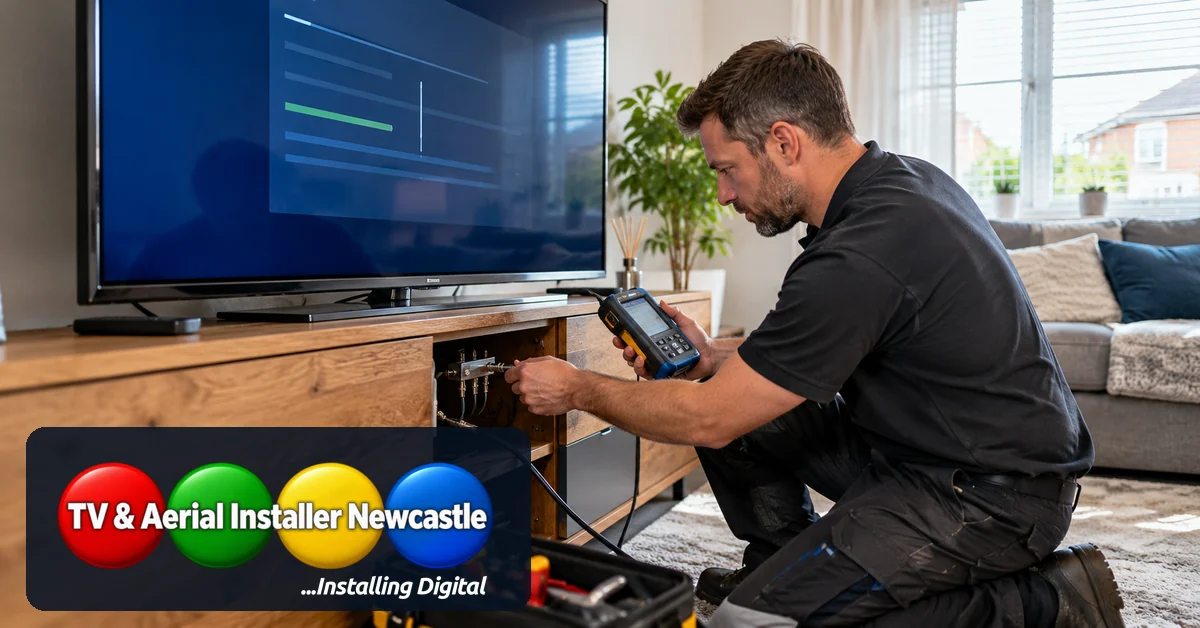
The plug at the television is a common weak point. A loose connector, bent centre conductor or stray strand of screening touching the inner conductor can cause intermittent reception or a complete loss of signal. A cable pulled tight behind a wall-mounted television can also loosen over time. Switch off equipment before inspecting accessible leads, check that plugs are secure and avoid forcing connectors. Do not dismantle powered distribution equipment or attempt work on rooftop aerials.
Outdoor cable and water ingress
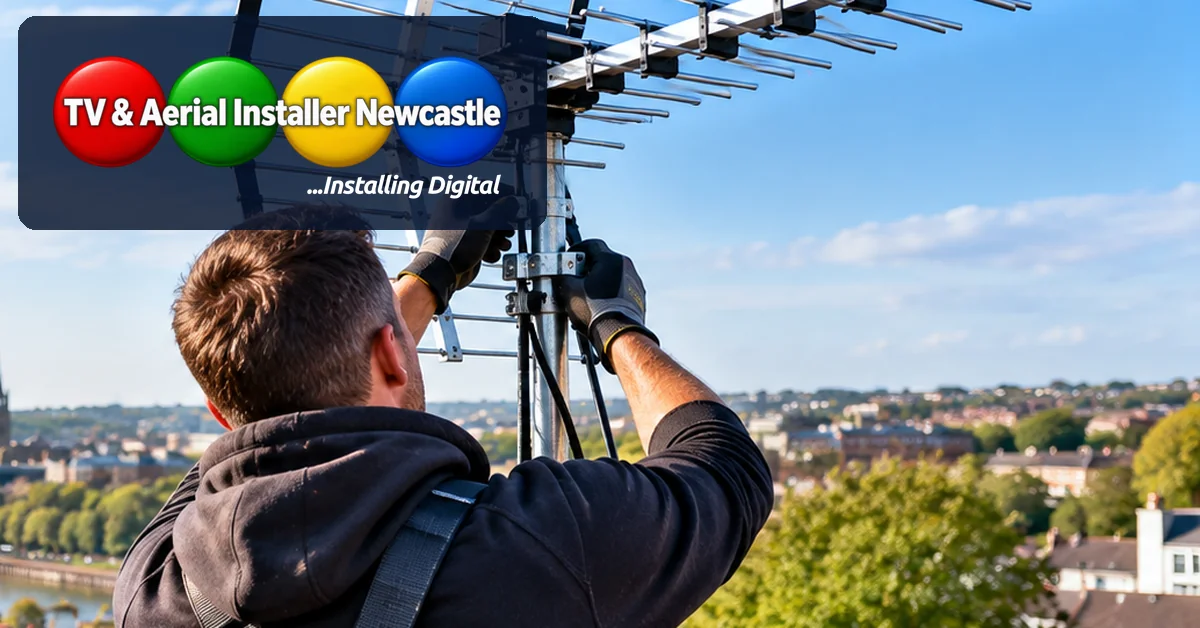
Outdoor cable is exposed to ultraviolet light, temperature changes, wind and rain. Cracked outer insulation or an inadequately weatherproofed connection can let moisture travel along the cable and affect reception. Discolouration or corrosion around a connection can be a clue, but the fault may be hidden in a loft or behind a fascia. Outdoor routes also need suitable clips, sensible bends and safe separation from electrical wiring. Roof-level inspection should be left to an appropriately equipped installer.
Long cable runs and extra rooms
Every cable run introduces some signal loss, and longer routes generally lose more than short ones. Splitters also divide the available signal between outputs. If the lounge TV works but an upstairs television struggles, the issue may involve cable length, a splitter, connector quality or the starting signal level. An amplifier is not automatically the answer: boosting a poor-quality or overloaded signal can make matters worse. Our guide to TV aerial splitters and multi-room signal problems explains the trade-offs.
How to check a suspect flylead
A flylead is the short cable connecting the wall socket to the television or set-top box. It is one of the easiest components to test without touching fixed wiring. If you have a known-good, correctly fitted replacement, try it and note whether the problem changes. Inspect the original lead for tight kinks, crushed sections and loose ends. If reception is poor on several televisions, the problem is more likely to be upstream than in one short lead. Avoid repeated retuning while the underlying signal is unstable.
Signal strength is not the whole story
A television’s signal-strength indicator is only a rough guide and varies by manufacturer. Signal quality is often more useful when diagnosing picture breakup, because interference and errors can affect reception even when the strength reading appears high. Professional meters can examine the received signal more precisely and help identify whether the aerial, cable, connections or distribution equipment need attention. For missing services after a retune, see our Freeview channels troubleshooting guide.
Planning new cable routes neatly
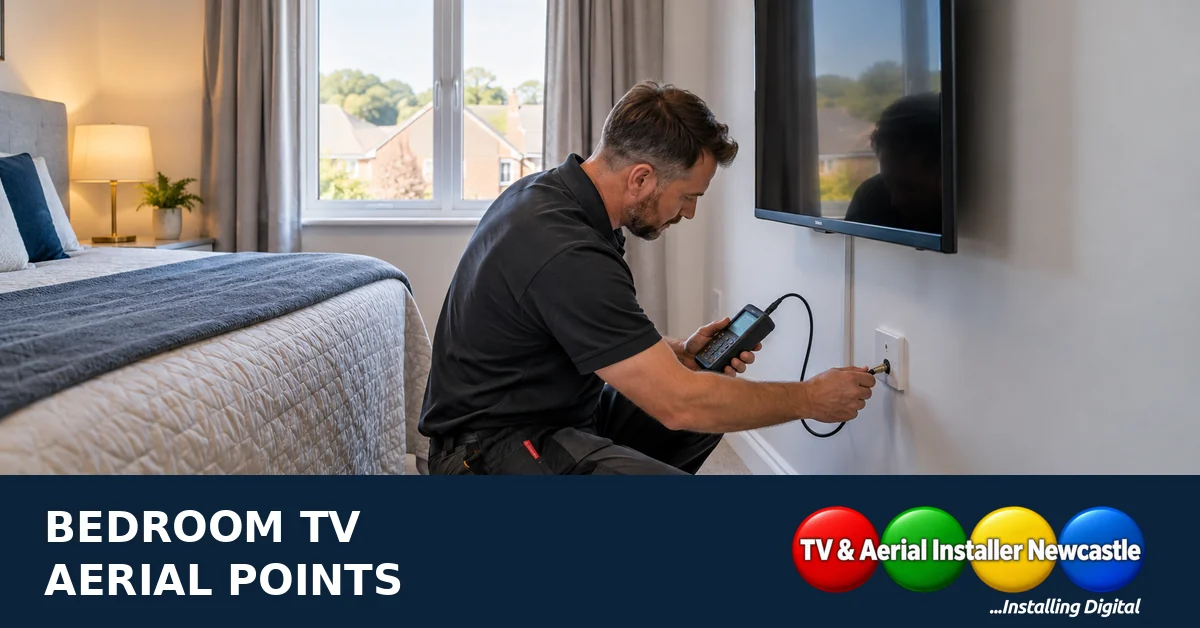
If you are renovating or adding a TV point, plan the cable route before decorating. Consider where the television, wall socket and any recorders or set-top boxes will sit. Leave access for future servicing, protect cables from sharp edges and avoid routing them where doors, furniture or fixings may crush them. Where a television is wall mounted, choose a route that does not put tension on its connector. Our wall-mounted TV cable management guide covers the wider setup.
When to book an aerial cable inspection
A professional inspection is worthwhile when reception changes with weather, channels disappear across multiple rooms, outdoor cable looks damaged or a previous installation contains several unexplained joins. An installer can test the signal at different points, check connectors and identify whether cable replacement is genuinely needed. For Newcastle and surrounding North East homes, the aim should be a reliable signal and a tidy, safe installation rather than replacing parts by guesswork. Start with the simple indoor checks, then seek an assessment if the fault persists.