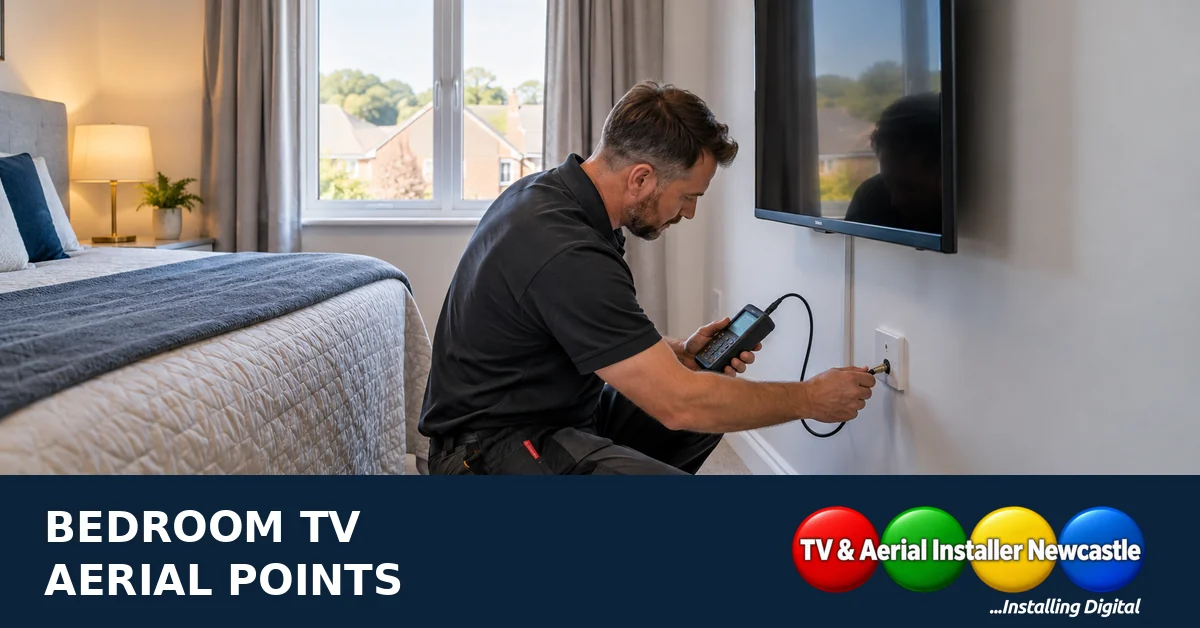
Adding a television to a bedroom, home office or spare room often seems simple: fit the screen, plug it in and start watching. The detail that gets missed is how the television will receive its channels. A new TV aerial point needs more than a socket on the wall. It needs a suitable cable route and a reliable signal from the property’s existing aerial or distribution system.
For homeowners in Newcastle, Cramlington, Killingworth and nearby Northumberland communities, planning the aerial connection alongside the TV position can avoid exposed cables, weak reception and unnecessary redecorating. Here is what to consider before arranging a new bedroom television point.
What does a new TV aerial point actually involve?
A standard terrestrial TV aerial point is usually a coaxial outlet connected by cable to an aerial or an existing distribution system. The wall plate is only the visible end of the installation. If the cable behind it is disconnected, damaged or connected to a weak signal, fitting a smart new socket will not solve the problem.
An installer will normally assess the available aerial feed, identify a practical route to the new room and decide whether a direct cable, suitable splitter or distribution amplifier is required. The right choice depends on measured signal quality and how many televisions already use the system.
Check the existing aerial before adding another room
Start by finding out whether the property has a working roof or loft aerial. Check which rooms already receive terrestrial channels and whether reception is stable. A home may have several coaxial wall sockets, but not every socket will necessarily be connected. This is common in properties where cabling was installed during construction but the aerial system was completed later.
Ask whether the new point will share an existing feed or need a separate cable run. If reception is already unreliable downstairs, dividing that feed again could make matters worse. Our guide to TV aerial splitters and multi-room signal loss explains why the number of connected outlets matters.
Choose the television position before routing the cable
The ideal socket location depends on whether the television will stand on furniture or be mounted on the wall. For a wall-mounted screen, the aerial outlet should be planned alongside power, HDMI connections and any streaming or soundbar equipment. A poorly positioned socket can leave visible loops of cable or prevent the television sitting close to the wall.
Consider viewing height from the bed, glare from the window, access to the television’s ports and how easily the screen can be removed for future maintenance. Our TV cable management guide covers tidy routing and practical access.
What cable route works best in a bedroom?
Possible routes include loft spaces, accessible floor voids, existing service routes or discreet surface-mounted trunking. The shortest route is not always the best route. It must be safe, protected from damage and suitable for the building’s construction.
In some homes a cable can enter from an external wall, provided weatherproofing and the route are designed correctly. In others, internal routing offers a neater finish. An installer should check for hidden electrical services, pipework and structural obstacles before drilling. Cables should not be run through unsafe openings or improvised alongside mains wiring.
Will a splitter reduce the signal?
Yes. A passive splitter divides the available signal and introduces insertion loss. Whether that matters depends on the quality and strength of the incoming signal and the cable system. Adding an amplifier without testing is not a reliable shortcut: it cannot repair a noisy or damaged feed and may introduce its own problems.
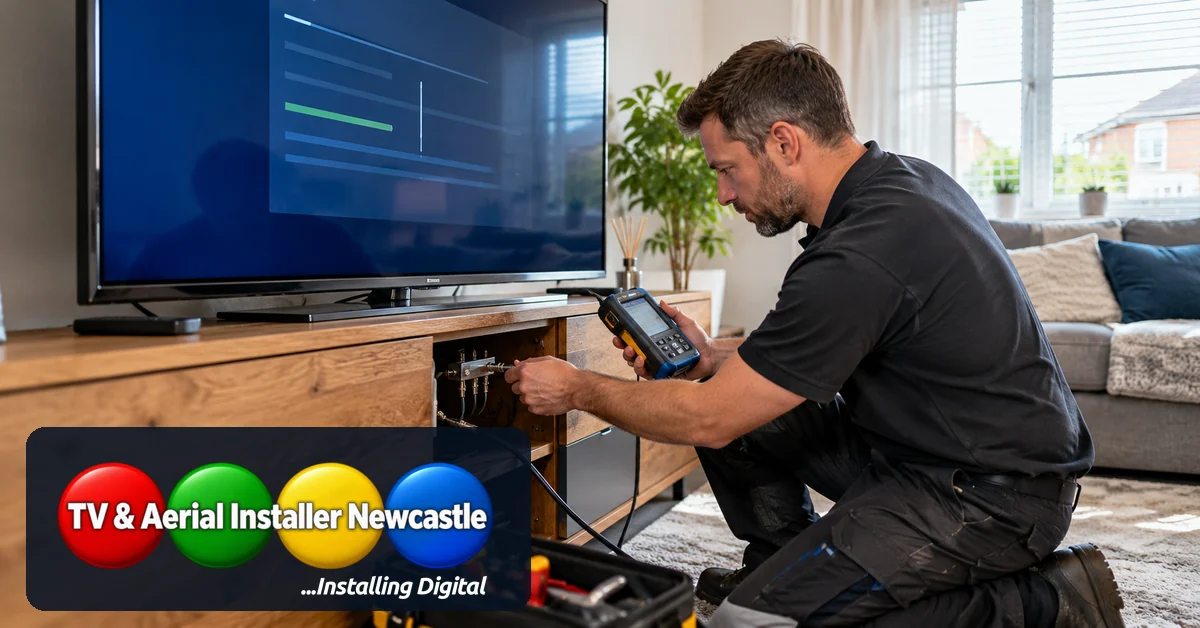
A competent installer can measure the signal at the existing connection and the proposed new point. That helps establish whether the current aerial and distribution equipment can support another television without affecting reception elsewhere in the house.
Do you need an aerial point for a smart TV?
Not necessarily. Streaming services use an internet connection, while terrestrial Freeview channels ordinarily require a suitable aerial feed. A smart TV can provide streaming apps without an aerial, but that does not guarantee access to every broadcast channel or the same live television experience.
Decide what you actually watch before paying for new cabling. If the bedroom television is mainly for streaming, check the Wi-Fi connection where the screen will sit. A poor wireless signal can interrupt video even when the television itself is working correctly. See our advice on smart TV Wi-Fi problems for useful checks.
What about new-build properties and extensions?
New-build homes and extensions may have coaxial cables installed but left unterminated, or they may have a central distribution location where additional rooms can be connected. Before drilling fresh holes, ask for the electrical and low-voltage cabling plan if one is available. Check cupboards, loft spaces and utility areas for labelled cable ends.
If a room is being refurbished, plan the aerial point before plastering and decorating. It is usually easier to agree cable routes and outlet positions while walls and floors are accessible than to conceal cables after the room is finished.
Questions to ask your installer
- Is the existing aerial feed suitable for another television?
- Will the new outlet affect reception in other rooms?
- Can the cable be concealed without unsafe alterations?
- Where should the wall plate sit relative to the television and power outlet?
- Will the final connection be tested for signal quality?
- How can the cable remain accessible for future repairs?
Arrange a tidy, reliable bedroom TV setup
A well-planned bedroom aerial point is about dependable reception, neat cable routing and sensible positioning. It is worth checking the existing system before adding another connection, particularly where several televisions share one aerial.
TV & Aerial Installer Newcastle provides aerial installation and TV setup support across Newcastle and nearby areas. Discuss the room layout, existing aerial feed and preferred television position before work begins so the finished installation suits the home.