Why TV reception can change when the weather turns
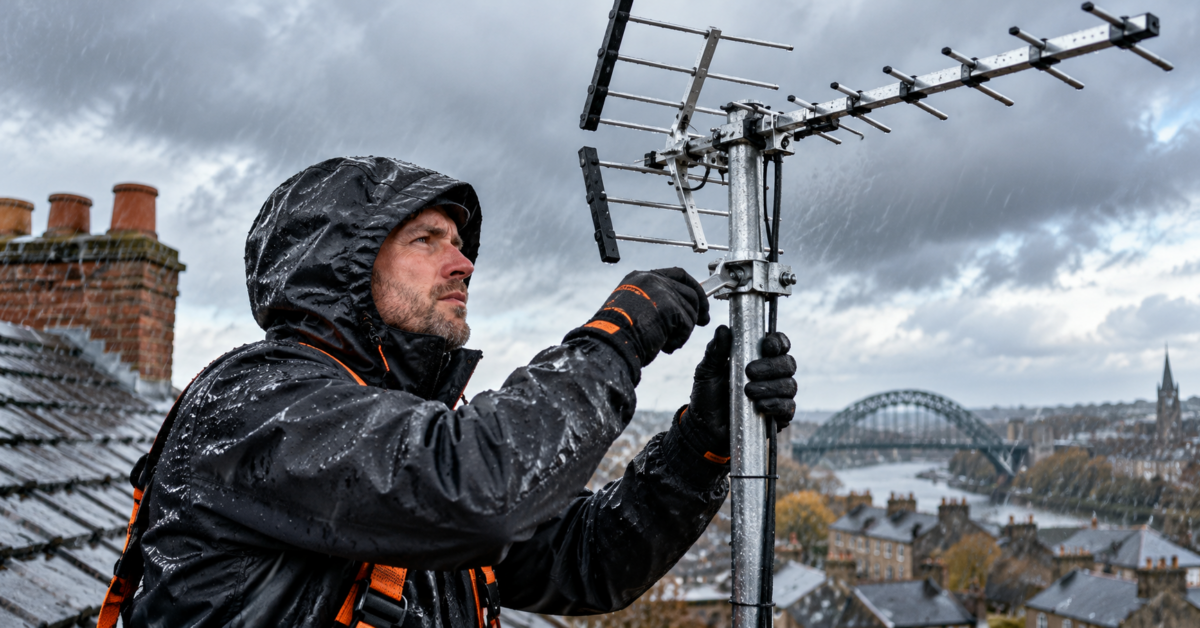
A clear television picture can suddenly start breaking into blocks, freezing or dropping channels during a spell of heavy rain or strong wind. It is tempting to blame the weather itself, but reception problems usually have a more specific cause. Wind may move an already loose aerial, water may find its way into a damaged connection, or a marginal signal may become more noticeable when conditions change.
If you live in Newcastle or elsewhere in the North East, the sensible starting point is to establish whether the fault affects one television, several rooms or neighbouring homes. That helps separate a household installation issue from a wider transmission problem before anyone starts moving equipment.
What weather-related TV interference looks like
Digital TV reception often fails differently from older analogue television. Instead of a gradually snowy picture, you may see blocky images, sound cutting out, a “no signal” message or missing channels. A short interruption during a storm does not automatically mean the aerial needs replacing. However, a problem that returns whenever the wind picks up deserves a closer look.
Note which channels are affected and whether the issue happens at particular times. Also check whether a second TV on the same aerial system behaves the same way. These details make it easier to diagnose the fault and avoid unnecessary changes.
Five possible causes of reception problems in bad weather
1. A loose or poorly aligned aerial
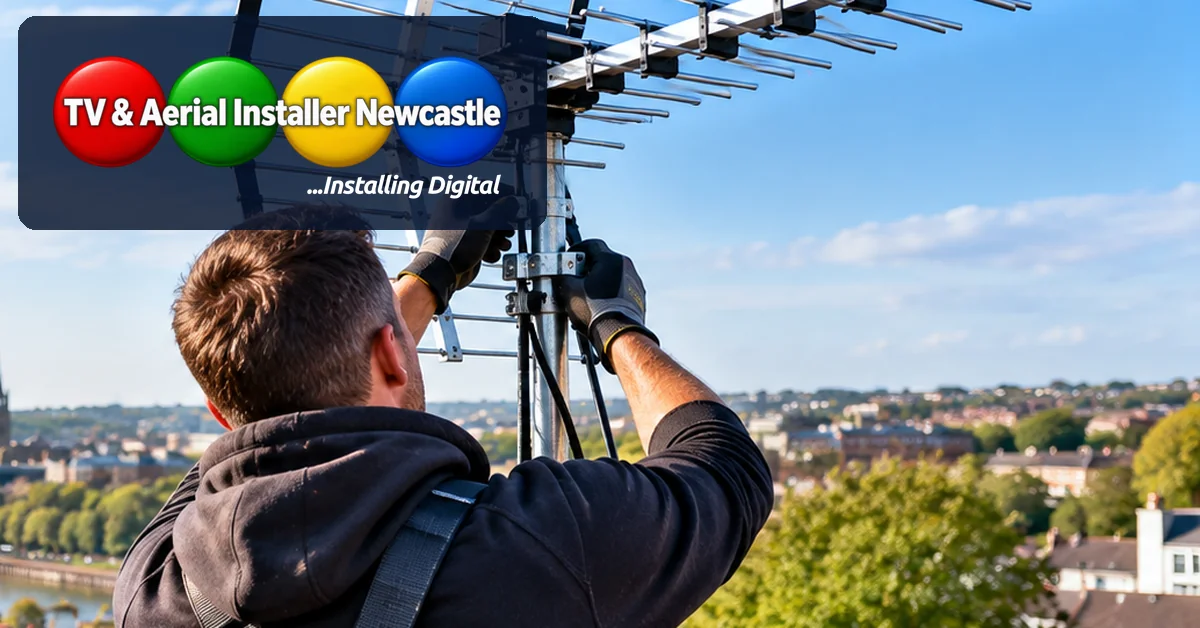
Outdoor aerials need secure fixings and a clear orientation towards the relevant transmitter. Strong winds can expose an existing weakness in a bracket, mast or fixing. Even small movement may affect a setup that already receives a borderline signal. Do not attempt to inspect roof-mounted equipment during windy or wet weather.
2. Water entering a cable or connection
Ageing coaxial cable, cracked insulation and poorly sealed outdoor connectors can let moisture into the system. The result may be intermittent signal loss that appears after rain and improves as conditions dry. Replacing a television or retuning channels will not repair a damaged cable run.
3. An already weak signal
Aerial reception depends on location, terrain, building layout and the condition of the installation. When the available signal has little margin for error, small changes may push some channels below the level needed for reliable viewing. Our guide to getting better TV reception in Newcastle explains why the full installation matters.
4. Splitters and additional rooms
Sending one aerial feed to several televisions can introduce losses, particularly if connectors are poor or a splitter is unsuitable. The weather may appear to be the trigger when the underlying problem is an already marginal signal in one room. Read more about TV aerial splitters and signal loss before adding another connection.
5. Wider transmitter or local reception issues
Not every interruption originates at your property. Planned engineering work, a transmitter fault or unusual atmospheric conditions can affect reception across an area. If several nearby households lose the same channels at once, check an official transmitter or service-status source before arranging work on your aerial.
Safe checks you can make indoors
There are several useful steps that do not involve ladders or outdoor electrical equipment. Start with the simplest checks and change only one thing at a time so you know what made a difference.
- Check that the aerial lead is firmly connected to the television and wall socket.
- Look for visible damage or sharply bent indoor cables without dismantling fixed wiring.
- Try another television on the same system, if one is available.
- Check whether the problem affects all channels or only a particular group.
- Ask a neighbour whether they are seeing the same interruption.
- Check official transmitter information if several homes are affected.
Resist the urge to retune immediately. If a television searches for channels while the incoming signal is temporarily absent, it may store an incomplete channel list. Once the underlying reception problem has cleared, a retune may be appropriate, but it should not be the first response to every brief interruption.
When to ask for an aerial inspection
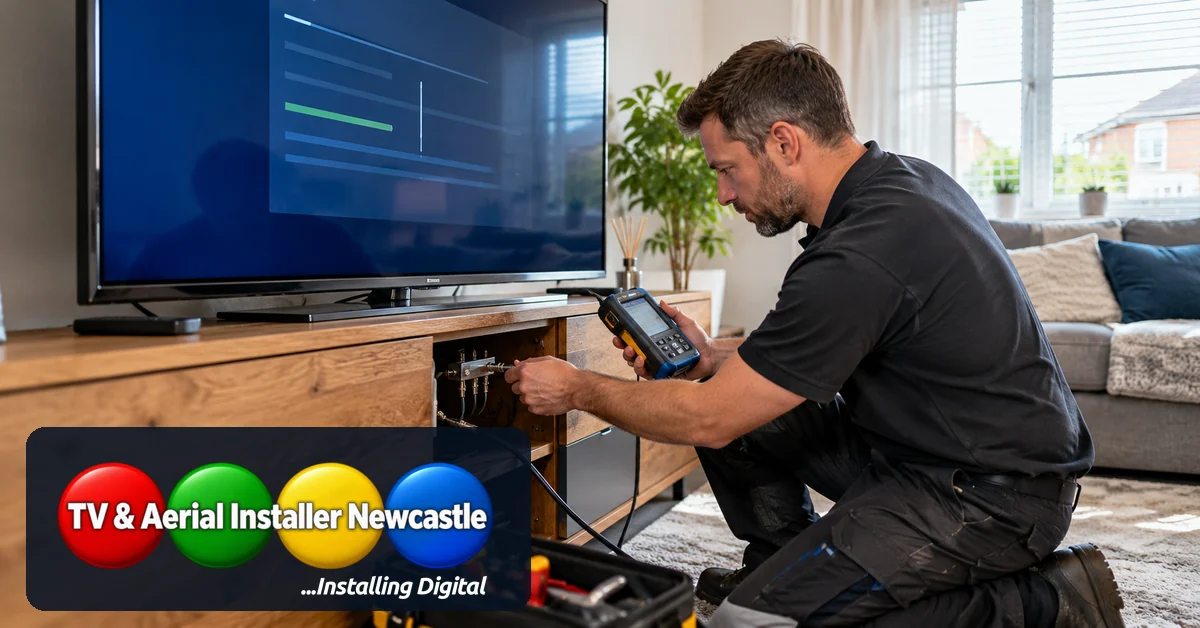
Professional help is sensible when reception fails repeatedly after rain, the aerial appears to move in the wind, several rooms have persistent problems or an outdoor cable looks damaged. A technician can assess signal quality, cable condition, connectors and aerial alignment rather than guessing from the television’s signal-strength bar alone.
Roof access, aerial brackets and external cable runs are not suitable DIY jobs in poor weather. Never climb onto a roof or work near overhead power lines to investigate a television fault. Wait for safe conditions and use a competent installer.
Preventing repeat interruptions
A reliable aerial installation is about more than buying a high-gain aerial. Correct positioning, sound fixings, weather-resistant connections and suitable distribution to each room all matter. If you are planning additional television points or rearranging your home setup, it is worth considering the whole signal path before new cables are hidden or rooms are decorated.
Keep a brief record of the problem: when it started, what the weather was doing, which channels failed and whether other televisions were affected. Those observations can make a professional visit more productive and help distinguish a persistent installation fault from a one-off interruption.
From our experience at TV and Aerial Installer Newcastle
Mick Stocker has 23 years of experience in the audiovisual industry, including aerial installation, TV installation and diagnosing reception issues across Northumberland. In practice, weather-related picture breakup often points to an underlying weakness in the aerial system, cabling or signal path rather than the weather being the fault on its own.
We always recommend starting with safe indoor checks and avoiding roof-level inspection in wet or windy conditions. If the problem keeps returning, a proper inspection can identify whether the issue is alignment, cabling, connections or the wider installation.
TV aerial help in Newcastle and surrounding areas
If your picture regularly breaks up during wind or rain, TV & Aerial Installer Newcastle can help assess the aerial system and discuss appropriate repairs or improvements. Describe the symptoms and the rooms affected when you get in touch, rather than assuming a new aerial is the only answer.
For further guidance on local reception and TV installation services, visit TV & Aerial Installer Newcastle. A methodical check is usually the quickest route to understanding why your picture keeps disappearing.