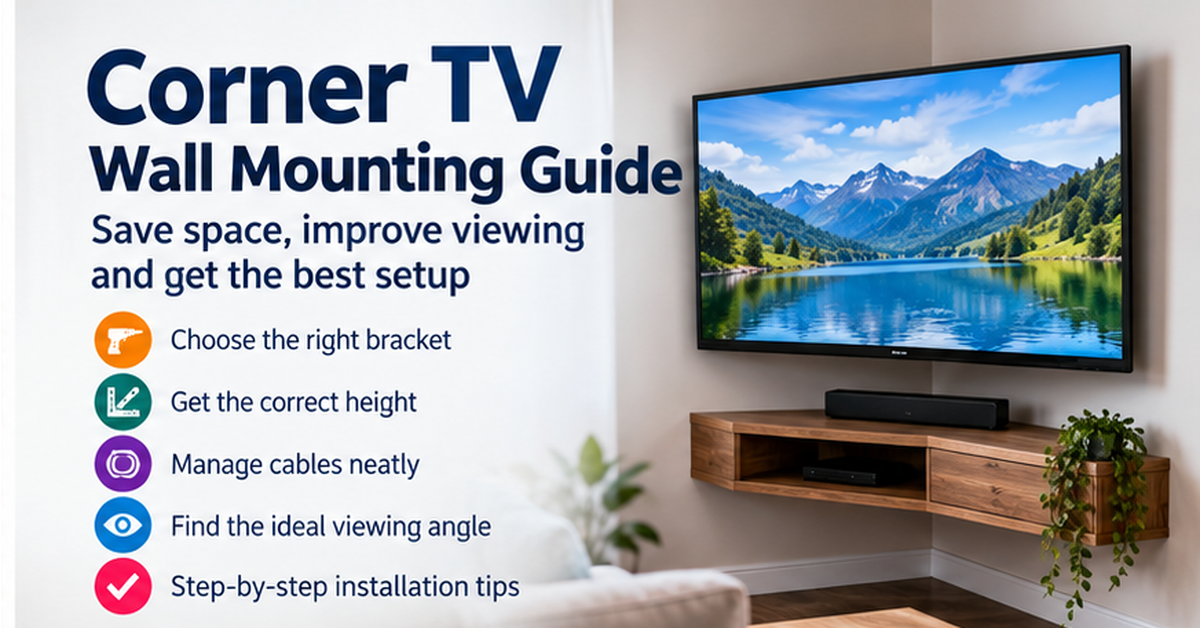
Thinking of fitting your TV into a corner? The right position and bracket can save floor space, but the details matter. Here is what to check before installation.
Is a corner the right place for your television?
A corner can be a useful position when a room has several doors, a fireplace or limited uninterrupted wall space. It is not automatically the best choice, however. Before choosing a bracket, check where people will sit, how far they will be from the screen and whether the display will obstruct windows, walkways or furniture. A little planning helps avoid a screen that looks tidy but is uncomfortable to watch.
Check the viewing angle
Stand or sit in each regular viewing position and imagine the screen facing you. A television set deep into a corner may need to swivel so viewers are not looking across the panel at an awkward angle. Think about reflections from windows and lamps at different times of day. If you have a large sofa or an open-plan space, one fixed angle may not suit everyone.
Choose the bracket around the room
Corner installations often use an articulated or full-motion bracket that allows the screen to extend and rotate. Check the bracket’s stated screen size, weight limit and mounting compatibility against the television manufacturer’s specifications. Consider how far the arm must extend before the screen clears the adjacent wall. A bracket that swivels on paper may have much less useful movement once the actual television is fitted.
Understand the wall construction
The fixing method depends on the wall. Solid masonry, timber studs, plasterboard linings and dot-and-dab finishes need different assessments. The television’s weight, bracket leverage and fixing positions all matter, especially with an extending arm. Do not assume that ordinary plasterboard fixings are suitable for a heavy articulated installation. A competent installer should identify the supporting structure and use fixings appropriate to the actual wall.
Allow room for cables and devices
Check where power, aerial, network and HDMI connections will run. A corner can make cable routes less obvious, but it can also leave plugs and ports hard to reach. Plan enough slack for the full movement of a swivelling bracket without pulling on connectors or trapping cables. Keep mains power arrangements safe and accessible; do not conceal unsuitable extension leads inside walls.
Think about sound and accessories
A soundbar may need its own mounting position or a bracket that moves with the television. If the TV rotates but the soundbar stays against one wall, the sound can feel disconnected from the picture. Plan the location of streaming boxes, games consoles and other devices before the screen is installed. Check remote-control access and ventilation rather than hiding everything in a tight corner.
Measure before buying
Record the available wall widths, nearby furniture, television dimensions and likely bracket extension. Measure the distance from the screen to the main seating position and check the height at which the centre of the picture will sit. Marking out the screen’s footprint with removable tape can help you visualise the result. Leave sufficient clearance for opening doors, curtains and access to the bracket.
Plan a tidy installation
Neatness should not come at the expense of serviceability. Consider surface trunking, sensible cable routes and whether you will need to add a device later. Photograph existing sockets and wall features before moving furniture. If the room may be rearranged, choose a mounting position that still works with alternative seating layouts.
When professional fitting makes sense
Corner installations can involve awkward access, substantial bracket extension and wall types that are difficult to assess by eye. TV & Aerial Installer Newcastle provides television wall mounting and related setup services. A site-specific assessment can help establish a practical screen position, suitable fixings and cable-management options before drilling starts.
From our experience at TV and Aerial Installer Newcastle
Mick Stocker has 23 years of experience in the audiovisual industry and installs wall-mounted televisions and concealed cabling across Northumberland. Corner installations need more planning than a straightforward flat-wall fit because bracket reach, leverage, cable movement and the viewing angle all interact.
A site-specific check helps confirm the supporting wall, the usable swing of the bracket and a cable route that stays tidy without being strained when the screen moves.
Discuss your corner TV installation
For help planning a wall-mounted television and a tidy cable layout, visit TV & Aerial Installer Newcastle to enquire about installation.